Table of Contents
In a busy diagnostic lab, every small detail matters. When a lab technologist slides a sample tube into a rack, or a pathologist handles reagents under a microscope, the last thing they want is a glove failure. A tiny tear, unnoticed, can compromise a test, risk contamination, or worse — bring reputational and safety consequences. Over the years, many labs began with latex or vinyl gloves, until mounting experiences with allergies, puncture events, and supply disruptions pushed them toward a more dependable option: nitrile.
My own journey in the medical supplies industry taught me that glove choice is not just about safety — it reflects operational maturity. An early client once shared how repeated batch failures in their latex glove deliveries had led to repeated downtime, rework, and distrust in their procurement chain. When they switched to a robust nitrile supplier with tighter controls, the number of failures dropped, their technicians were safer, and their audits became smoother. That shift may seem subtle, but it underpins why nitrile gloves are often the unsung hero in labs, pharma, pathology houses, and other critical spaces.
In this article, I’ll take you through what nitrile gloves are, who uses them and why, how they measure up to alternatives, and what to keep in mind when you source them — all without getting bogged down in jargon.
What Are Nitrile Gloves?
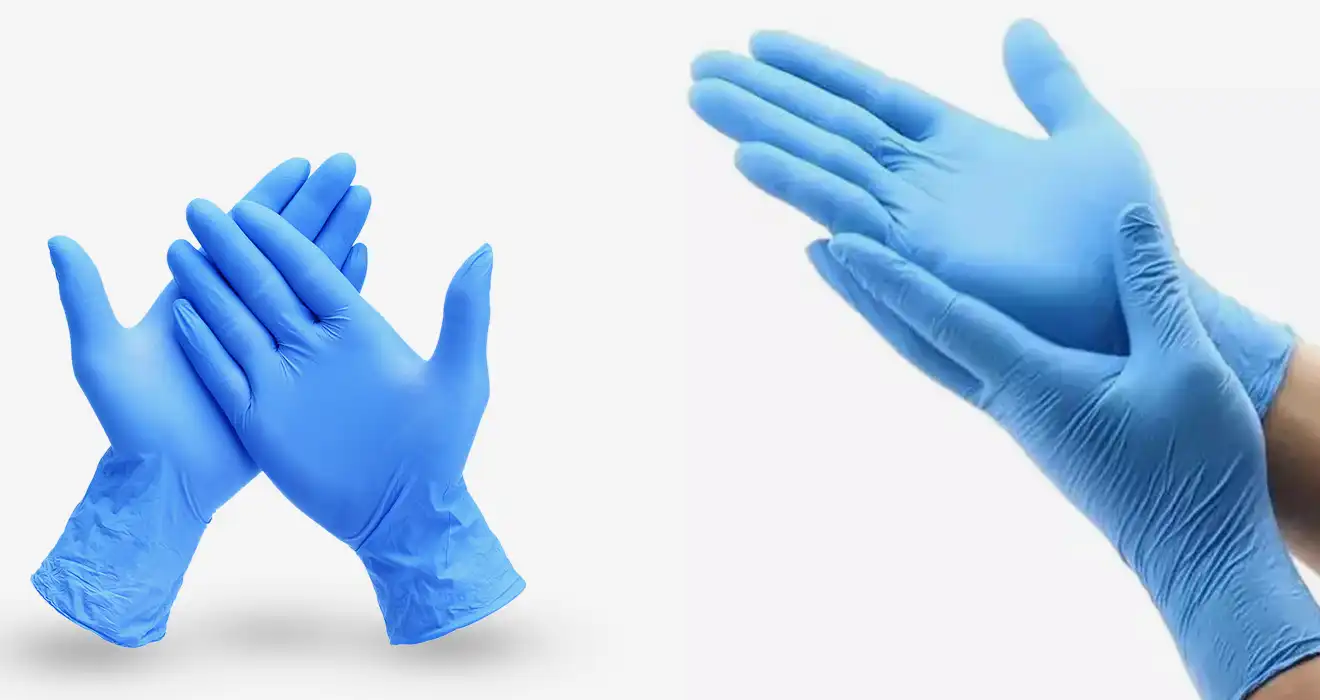
At their core, nitrile gloves are crafted from nitrile butadiene rubber (NBR), a synthetic elastomer. Unlike latex gloves that come from natural rubber, nitrile is fully synthetic, which gives it a distinct set of mechanical and chemical properties. Because of this, nitrile gloves tend to resist punctures, tears, and exposure to many solvents and oils more strongly than many other disposable glove materials.
Material and Structure
- Synthetic Composition: The nitrile polymer is formed by copolymerizing acrylonitrile and butadiene. These monomers give nitrile its chemical resistance (from the nitrile) and elasticity (from the butadiene).
- Powder-Free: Most medical or lab-grade nitrile gloves are manufactured powder-free to reduce contamination risk and skin irritation — especially in sensitive procedures.
- Thickness (mils): The glove thickness (often measured in “mils,” where 1 mil = 0.001 inch) plays a big role in balancing protection vs dexterity. Common thicknesses are 3 mils to 8 mils, depending on use.
- Surface Finish: Some gloves are textured (e.g. finely micro-roughened) to improve grip under wet or slippery conditions; others are smooth for tasks where fine touch is critical.
- Certifications and Compliance: Medical or diagnostic gloves often must comply with standards (for example ISO, EN, or regional equivalents) to assure biocompatibility, barrier integrity, and chemical resistance.
Because of these attributes, nitrile gloves give users a fine balance: they are stretchable, conform snugly to the hand, provide tactile feedback, and yet remain tough enough to resist puncture in many typical lab or industrial settings.
Who Uses Nitrile Gloves?
Nitrile gloves see use across a broad spectrum of industries and user roles due to their versatility, safety, and reliability. Below is a deeper look into where they matter most, and some practical examples to ground their application.
- Clinical and Healthcare Settings
- Doctors, Nurses, Lab Technicians: In clinical labs, pathology units, diagnostic centres — nitrile gloves protect against exposure to bodily fluids, pathogens, and chemical reagents. They ensure that sample integrity is maintained, and that cross-contamination is minimized.
- Surgical and Procedure Rooms: Where sterility is paramount, nitrile gloves may be used (when approved and certified) to maintain a reliable barrier during invasive or semi-invasive procedures.
- Dental Clinics, Dialysis, Imaging Centers: Even in peripheral healthcare units, nitrile gloves serve as standard hand protection against saliva, disinfectants, and cross-contamination.
Example: A diagnostic lab using multiple reagent washes and buffer steps found latex gloves increasingly failing under aggressive chemicals; when switched to nitrile, incidents of glove tear dropped by over half (anecdotal, but typical in regulated labs).
- Pharmaceutical & Biotech Manufacturing
- Cleanroom Operators: In formulation areas, aseptic filling zones, and controlled environments, nitrile gloves are part of the PPE stack, often worn under outer gloves to add a safety layer.
- Quality Control, QC Labs: In microbiology units, analytical labs, and stability testing, the gloves protect both the operator and the sample from contamination.
- Packaging & Inspection: When tablets, vials, or bottles are handled manually, nitrile gloves prevent contamination while resisting solvents, cleaning agents, or trace chemicals.
- Diagnostic & Pathology Labs
Because pathology labs deal with tissue samples, biopsies, blood, reagents, stains, and often aggressive chemicals (xylene, formalin, etc.), nitrile gloves are a preferred barrier. They maintain dexterity but reduce the risk of pinholes or failures that might otherwise compromise a slide or test. Many labs mandate their use over latex for precisely this reason.
- Food Processing & Food Service (when food-safe certified)
Some nitrile gloves are rated for food contact. In food processing plants, cold rooms, or kitchens, workers wear them to handle raw ingredients, packaging, or ready-to-eat items — provided the gloves have the necessary food-grade certification.
Example: In a meat processing unit, line staff wearing food-grade nitrile gloves were able to manage greasy surfaces, cold temperatures, and repeated glove changes, all while maintaining hygiene standards.
- Automotive, Mechanical & Maintenance Work
- Mechanics, service staff, assembly line workers: Exposure to oils, greases, solvents, cutting oils, and hydraulic fluids is frequent in this domain. Nitrile gloves resist many of these chemicals better than latex or vinyl.
- Electronics Assembly and Repair: In clean electronics lines or PCB handling, nitrile gloves protect against oils and contaminants and offer better grip and static performance.
- Industrial & Chemical Handling
In chemical plants, cleaning operations, or maintenance units, nitrile gloves are used to resist exposure to solvents, acids, alkalis, and potentially toxic liquids. They are often layered with outer gloves or gauntlets when handling aggressive chemicals. Their puncture resistance also makes them favorable in work with sharp components or scrap.
- Beauty, Tattoo & Personal Care
- Tattoo Artists, Piercers: They deal with inks, dyes, and exposure to bodily fluids; nitrile gloves reduce allergic responses while maintaining dexterity.
- Hair Stylists, Nail Technicians: Handling dyes, bleaches, and solvents can degrade weaker gloves; nitrile offers better chemical resistance and fewer glove changes.
- Research & Academic Labs, R&D
In university labs, R&D centers, or industrial research, nitrile gloves protect against analytical reagents, solvents, cell culture media, and typical lab hazards. Researchers appreciate the balance of tactility and protection.
Why Choose Nitrile Over Other Disposable Gloves?
Choosing nitrile over alternatives (latex, vinyl, etc.) is about mitigating risks and maximizing reliability. Here’s why nitrile often becomes the preferred option — especially in critical labs or supply chains.
- Hypoallergenic / Latex-Free Safety
Latex allergies are well documented. Some personnel, patients, or clients have reactions ranging from skin irritation to more severe immune responses. Nitrile is synthetic, devoid of the natural proteins in latex, making it a safer alternative for allergy-sensitive environments.
- Superior Puncture and Tear Resistance
Compared to latex or vinyl of equivalent thickness, nitrile typically resists punctures and tears better. That means fewer glove failures during even delicate tasks, and fewer hidden pinholes risking contamination.
- Strong Chemical Resistance
Because of its molecular makeup, nitrile resists many solvents, oils, greases, acids, and bases better than latex or vinyl. In labs, pharma, or industrial settings where exposure to reagents or cleaning agents is common, this makes nitrile gloves more durable and dependable.
- Better Longevity Under Stress
In extended wear, repeated flexing, or exposure to heat or UV (in some indirect applications), nitrile tends to hold up better than other glove materials. It is less prone to degradation under typical lab temperature or ambient conditions.
- Good Dexterity & Tactile Sensitivity
Modern nitrile formulations allow fairly thin gloves (e.g. 3–5 mil) that offer good tactile response, precision, and control. This is pivotal in lab workflows or fine tasks where fine motor feedback is critical.
- More Stable Supply & Scalability (when sourced well)
Latex glove supply can fluctuate (due to natural rubber crop cycles, climate, pests). Vinyl can be cheaper but lower in performance. Nitrile, leveraging synthetic raw materials, offers a more controllable input supply chain — assuming the procurement is managed well. (We’ll discuss supply chain challenges later.)
- Fewer Contamination Risks
Powder-free nitrile reduces particle shedding, dust, or powder residue, which is especially important in cleanrooms, labs, or environments sensitive to contamination.
Best Practices When Choosing & Using Nitrile Gloves
Here are practical tips to guide procurement, quality assurance, and on-the-ground use:
- Verify Certifications & Testing
Ensure the gloves are tested for barrier integrity (e.g. ASTM or equivalent) and, if for medical or food use, the relevant regulatory clearances. - Balance Thickness and Dexterity
Select gloves based on use: lighter (3–5 mil) for general lab work; heavier (6–8 mil) for harsh chemical tasks. - Texture vs Smooth
Use textured surfaces where grip matters (wet/ slippery tools), smooth surfaces where fine touch is critical. - Size Fit Is Critical
Gloves too tight reduce comfort and increase risk of tears; too loose reduces dexterity and control. - Storage & Shelf Life
Store gloves in cool, dry places, shielded from UV light. Check expiration dates; most nitrile gloves last 3–5 years under proper conditions. - Regular Inspection & Handling Protocols
Before use, inspect gloves under light for pinholes or micro-tears. Train staff to remove gloves carefully, avoid cross contamination, and change gloves between tasks. - Disposal & Waste Handling
Used nitrile gloves should go into appropriate waste bins (biohazard or designated waste) and never be reused in single-use contexts. - Test in Real Conditions
Whenever possible, run pilot batches in real-use tasks before full adoption. That helps detect weak points under actual stress.
Conclusion
Nitrile gloves are no longer a niche choice — in many clinical, lab, industrial, and food settings, they’ve become the reliable baseline for hand protection. Their combination of chemical resistance, puncture strength, dexterity, and hypoallergenic properties make them ideal in rigorous environments. But the real advantage lies in informed sourcing and quality assurance: when you partner with a manufacturer who backs every batch with transparent certification and process control, you get more than a glove — you get consistency, safety, and trust.
If you’re looking to upgrade or standardize your glove supply, you may explore high-quality nitrile gloves here: https://evoindustries.in/product/nitrile-gloves/. Prioritize durability, compliance, and supply reliability — because in critical workflows, a glove is more than protection; it’s a safeguard for your reputation, safety, and operations.